Skip to content

A person key: this person stands for the start of a syllable, p-. Every character whose sound starts this way has this person in its scene. What are sound keys?

p · man

Pronunciation tips

The “Cheat Code”

Think of the p in “pie” when you say it with a clear puff of air—like you’re trying to lightly fog a tiny spot on a window.

Read full instructions

Mouth Mechanics (step-by-step)

  1. Close your lips firmly (both lips together), as if you’re about to say an English p.
  2. Build a little air pressure behind your lips while keeping the tongue relaxed (the tongue does not “make” this sound).
  3. Release the lips suddenly to start the syllable.
  4. Add a noticeable burst of air right after the release. (A quick “whoosh” of breath is the key feature.)
  5. Immediately move into the vowel that follows (a, o, ai, ei, ao, ou, an, en, ang, eng) without inserting an extra vowel like “uh.”

Quick self-check: Hold your hand or a thin piece of paper about 2–3 inches in front of your mouth. When you say Chinese p-, you should feel/see a stronger burst than in English “sp-” words.


English Approximation (how to get close)

English has a similar sound, but the amount of air is the issue.

  • “pie” — The p at the beginning is close. Use the very start of p in pie, but make sure the burst of air is crisp and obvious.
  • “pay” — The p in pay is similar; again, focus on the puff of air right as the lips open.
  • “pole” — The p in pole is similar; keep it clean and don’t soften it into a “b.”

Important adjustment for many learners:
If your p sounds too weak, exaggerate the breathy “pop” at first. If it sounds like b, you’re not releasing enough air (or you’re voicing it).


Common Mistakes (English-speaker patterns to avoid)

  • Mistake: Saying it like English “b.”
    Chinese p- is a “breathy pop.” If you make it heavy/voiced like b, listeners may hear b- instead.
  • Mistake: Adding an extra vowel (“puh-”).
    Don’t say puh-a for pa. It should be one smooth start: p → a.
  • Mistake: Too little air (especially after “s” habits).
    In English, p in “spin” is weak. If you copy that “spin p,” your Chinese p- may sound wrong.

Practice Pairs (visualizing the sound)

These English words are approximations to help you aim your mouth and airflow. Match the initial p.

Pinyin syllable English approximation What to copy pa pa in “pa-pa” The initial p burst, then open to a po po in “po-lar” The initial p burst, then rounded lips for “o” pai pi in “pie” Strong initial p, then glide toward “ai” pei pay Strong initial p, then “ay”-like vowel pao pow in “pow!” Strong initial p, then “ow” glide pou po in “po-et” (start) Strong initial p, then “oh/ou” glide pan pan Strong initial p, then end with n pen pen Strong initial p, then a “uh/eh”-like vowel, end with n pang “pong” (but more open “a”) Strong p, then open vowel, end with “ng” peng “pung” (approx.) Strong p, central vowel, end with “ng”

Reminder: The goal of the table is the initial p. The vowels/finals in Mandarin are not always identical to English.


Comparisons & Caveats

p vs b

In Mandarin, p- is the strong, airy version; b- is the less airy version. Many English speakers expect “b” to be voiced and “p” to be voiceless, but the practical listening difference in Mandarin is mainly how much air follows the release. If you don’t hear/feel that burst, you’re drifting toward b-.

The person

P is for Pinocchio.
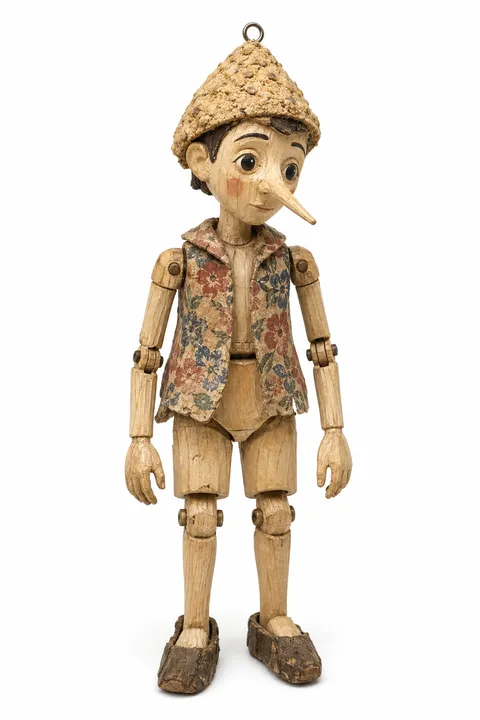
Comic of the mnemonic for p

Where this person goes

181 characters, by room.

In a1 · in front

pā syllable page

In a2 · kitchen

pá syllable page

In a4 · bathroom

pà syllable page
  • 怕 pà to be afraid

    怕 pà

    pà
    1. surname Pa
    2. to be afraid
    3. to fear
    4. to dread
    5. to be unable to endure
    6. perhaps

    From the CC-CEDICT dictionary.

  • 帕 pà to wrap

    帕 pà

    pà
    1. to wrap
    2. kerchief
    3. handkerchief
    4. headscarf
    5. pascal (SI unit)

    From the CC-CEDICT dictionary.

In ai1 · in front

pāi syllable page
  • 拍 pāi to pat

    拍 pāi

    pāi
    1. to pat
    2. to clap
    3. to slap
    4. to swat
    5. to take (a photo)
    6. to shoot (a film)
    7. racket (sports)
    8. beat (music)

    From the CC-CEDICT dictionary.

In ai2 · kitchen

pái (all 7)

In ai4 · bathroom

pài syllable page

In an1 · in front

pān syllable page

In an2 · kitchen

pán (all 13)
  • 盘 pán plate

    盘 pán

    pán
    1. plate
    2. dish
    3. tray
    4. board
    5. hard drive (computing)
    6. to build
    7. to coil
    8. to check
    9. to examine
    10. to transfer (property)
    11. to make over
    12. classifier for food: dish, helping
    13. to coil
    14. classifier for coils of wire
    15. classifier for games of chess

    From the CC-CEDICT dictionary.

  • 盤 pán plate

    盤 pán

    pán
    1. plate
    2. dish
    3. tray
    4. board
    5. hard drive (computing)
    6. to build
    7. to coil
    8. to check
    9. to examine
    10. to transfer (property)
    11. to make over
    12. classifier for food: dish, helping
    13. to coil
    14. classifier for coils of wire
    15. classifier for games of chess

    From the CC-CEDICT dictionary.

  • 磐 pán firm

    磐 pán

    pán
    1. firm
    2. stable
    3. rock

    From the CC-CEDICT dictionary.

  • 槃 pán wooden tray

    槃 pán

    pán
    1. variant of 盤|盘
    2. wooden tray

    From the CC-CEDICT dictionary.

In an4 · bathroom

pàn (all 10)
  • 判 pàn to judge

    判 pàn

    pàn
    1. to judge
    2. to sentence
    3. to discriminate
    4. to discern
    5. clearly distinguishable

    From the CC-CEDICT dictionary.

  • 盼 pàn to hope for

    盼 pàn

    pàn
    1. to hope for
    2. to long for
    3. to expect

    From the CC-CEDICT dictionary.

  • 叛 pàn to betray

    叛 pàn

    pàn
    1. to betray
    2. to rebel
    3. to revolt

    From the CC-CEDICT dictionary.

  • 畔 pàn edge

    畔 pàn

    pàn
    1. edge
    2. side
    3. boundary
    4. bank (of a river etc)
    5. shore

    From the CC-CEDICT dictionary.

  • 泮 pàn (literary) to melt

    泮 pàn

    pàn
    1. (literary) to melt
    2. to dissolve

    From the CC-CEDICT dictionary.

  • 拚 pàn to strive for

    拚 pàn

    pàn
    1. to strive for
    2. to struggle
    3. to disregard
    4. to reject
    pīn
    1. variant of 拼 pīn

    From the CC-CEDICT dictionary.

In ang1 · in front

pāng syllable page

In ang2 · kitchen

páng (all 14)

In ang3 · living room

pǎng syllable page

In ang4 · bathroom

pàng syllable page
  • 胖 pàng fat

    胖 pàng

    pán
    1. healthy
    2. at ease
    pàng
    1. fat
    2. plump

    From the CC-CEDICT dictionary.

In ao1 · in front

pāo syllable page

In ao2 · kitchen

páo (all 9)

In ao3 · living room

pǎo syllable page
  • 跑 pǎo to run

    跑 pǎo

    páo
    1. (of an animal) to paw (the ground)
    pǎo
    1. to run
    2. to run away
    3. to escape
    4. to run around (on errands etc)
    5. (of a gas or liquid) to leak or evaporate
    6. (verb complement) away
    7. off

    From the CC-CEDICT dictionary.

In ao4 · bathroom

pào (all 7)
  • 炮 pào cannon

    炮 pào

    bāo
    1. to sauté
    2. to fry
    3. to dry by heating
    páo
    1. to prepare herbal medicine by roasting or parching (in a pan)
    pào
    1. cannon
    2. CL:座 zuò
    3. firecracker
    4. variant of 炮 pào

    From the CC-CEDICT dictionary.

  • 泡 pào bubble

    泡 pào

    pāo
    1. puffed; swollen; spongy
    2. small lake (esp. in place names)
    3. classifier for urine or feces
    pào
    1. bubble
    2. foam
    3. blister (i.e. skin bubble)
    4. to soak
    5. to steep
    6. to infuse
    7. to dawdle
    8. to shilly-shally
    9. to hang about
    10. to pick up (a girl)
    11. to get off with (a sexual partner)
    12. classifier for occurrences of an action
    13. classifier for number of infusions
    14. bubble; foam
    15. blister
    16. to soak; to steep; to infuse
    17. to dawdle; to loiter
    18. to pick up (a girl)
    19. to get off with (a sexual partner)
    20. classifier for occurrences of an action
    21. classifier for number of infusions

    From the CC-CEDICT dictionary.

  • 疱 pào pimple

    疱 pào

    pào
    1. pimple
    2. acne
    3. blister
    4. boil
    5. ulcer

    From the CC-CEDICT dictionary.

  • 皰 pào pimple

    皰 pào

    pào
    1. pimple
    2. acne
    3. blister
    4. boil
    5. ulcer

    From the CC-CEDICT dictionary.

  • 礮 pào ancient ballista for throwing heavy stones

    礮 pào

    pào
    1. ancient ballista for throwing heavy stones
    2. variant of 炮 pào, cannon

    From the CC-CEDICT dictionary.

In ei1 · in front

pēi syllable page

In ei2 · kitchen

péi (all 8)

In ei4 · bathroom

pèi (all 11)

In (e)n1 · in front

pēn syllable page
  • 喷 pēn to puff

    喷 pēn

    pēn
    1. to puff
    2. to spout
    3. to spray
    4. to spurt
    pèn
    1. (of a smell) strong
    2. peak season (of a crop)
    3. (classifier for the ordinal number of a crop, in the context of multiple harvests)

    From the CC-CEDICT dictionary.

  • 噴 pēn to puff

    噴 pēn

    pēn
    1. to puff
    2. to spout
    3. to spray
    4. to spurt
    pèn
    1. (of a smell) strong
    2. peak season (of a crop)
    3. (classifier for the ordinal number of a crop, in the context of multiple harvests)

    From the CC-CEDICT dictionary.

  • 呠 pēn to spurt

    呠 pēn

    pēn
    1. to spurt
    2. to blow out
    3. to puff out
    4. to snort

    From the CC-CEDICT dictionary.

In (e)n2 · kitchen

pén syllable page
  • 盆 pén basin

    盆 pén

    pén
    1. basin
    2. flower pot
    3. unit of volume equal to 12 斗 dǒu and 8 升 shēng, approx 128 liters
    4. CL:个 gè

    From the CC-CEDICT dictionary.

  • 湓 pén flowing of water

    湓 pén

    pén
    1. flowing of water
    2. name of a river

    From the CC-CEDICT dictionary.

In (e)ng1 · in front

pēng (all 10)

In (e)ng2 · kitchen

péng (all 17)

In (e)ng3 · living room

pěng syllable page
  • 捧 pěng to clasp

    捧 pěng

    pěng
    1. to clasp
    2. to cup the hands
    3. to hold up with both hands
    4. to offer (esp. in cupped hands)
    5. to praise
    6. to flatter

    From the CC-CEDICT dictionary.

In (e)ng4 · bathroom

pèng syllable page

In o1 · in front

pō (all 7)
  • 泼 pō to splash

    泼 pō

    pō
    1. to splash
    2. to spill
    3. rough and coarse
    4. brutish

    From the CC-CEDICT dictionary.

  • 坡 pō slope

    坡 pō

    pō
    1. slope
    2. CL:个 gè
    3. sloping
    4. slanted

    From the CC-CEDICT dictionary.

  • 颇 pō Taiwan pr. [Po3]

    颇 pō

    pō
    1. surname Po
    2. Taiwan pr. [Po3]
    3. rather
    4. quite
    5. considerably
    6. oblique
    7. inclined
    8. slanting
    9. Taiwan pr. [po3]

    From the CC-CEDICT dictionary.

  • 頗 pō Taiwan pr. [Po3]

    頗 pō

    pō
    1. surname Po
    2. Taiwan pr. [Po3]
    3. rather
    4. quite
    5. considerably
    6. oblique
    7. inclined
    8. slanting
    9. Taiwan pr. [po3]

    From the CC-CEDICT dictionary.

  • 潑 pō to splash

    潑 pō

    pō
    1. to splash
    2. to spill
    3. rough and coarse
    4. brutish

    From the CC-CEDICT dictionary.

  • 钋 pō polonium (chemistry)

    钋 pō

    pō
    1. polonium (chemistry)
    2. Taiwan pr. [po4]

    From the CC-CEDICT dictionary.

In o2 · kitchen

pó syllable page

In o3 · living room

pǒ syllable page

In o4 · bathroom

pò (all 7)

In ou1 · in front

pōu syllable page
  • 剖 pōu to cut open

    剖 pōu

    pōu
    1. to cut open
    2. to analyze
    3. Taiwan pr. [pou3]

    From the CC-CEDICT dictionary.

In ou2 · kitchen

póu syllable page

In ou3 · living room

pǒu syllable page
  • 咅 pǒu pooh

    咅 pǒu

    pǒu
    1. pooh
    2. pah
    3. bah
    4. (today used as a phonetic component in 部 bù, 倍 bèi, 培 péi, 剖 pōu etc)

    From the CC-CEDICT dictionary.

  • 㕻 pǒu also pr. [tou4]

    㕻 pǒu

    pǒu
    1. variant of 咅 pǒu
    2. also pr. [tou4]

    From the CC-CEDICT dictionary.

  • 掊 pǒu break up

    掊 pǒu

    póu
    1. take up in both hands
    pǒu
    1. break up
    2. hit

    From the CC-CEDICT dictionary.

Recordings

Loading recordings