Pinyin initial: "hu"
/xu/
The Pinyin initial "hu" is used in the first half of Pinyin syllables. In MandarinBanana's mnemonic system, "hu" belongs to the group of Pinyin initials which are represented in mnemonics by animals. You can visit the Pinyin index to see all Pinyin syllables from this mnemonic group, or to see all Pinyin syllables "hu" can appear in.
Pronunciation Tips
The “Cheat Code”
Think of “h” said with the tongue pulled back like the German “ch” in Bach, and for most hu- syllables add a quick lip-rounding “w” glide right after it.
Mouth Mechanics (step-by-step)
-
Start with your tongue high and pulled slightly back.
The middle/back of the tongue should rise toward the back half of the roof of your mouth (not touching it), leaving a narrow passage for air. -
Create friction (a “hissy” breath) without voicing.
Push air through that narrow passage so you hear a soft, steady friction, like a whispered, breathy “sh,” but farther back in the mouth.
Your vocal cords should be off at the start (no buzzing). -
Keep the tip of your tongue relaxed and low.
The tongue tip should not point up or press behind the teeth. If it does, you’ll drift toward “sh.” -
For hua/huo/huai/hui/huan/hun/huang/hong, round the lips early.
As you make the friction, begin rounding your lips as if you’re about to say “w”.
In most “hu-” syllables, the sound is effectively (back fricative) + (w-like glide) + vowel. -
Move smoothly into the vowel; don’t “pop” the sound.
There is no stop and no explosion. It should feel like air flowing continuously from the fricative into the vowel.
English Approximation (what to borrow, what to change)
English does not have this exact sound as a normal letter sound. Here are the closest ways to approximate it:
-
“Bach” / “Loch” (if you know the German/Scottish “ch”)
Use the “ch” sound (the rough, back-of-the-throat friction) as the starting friction for hu-.
Then, for syllables like hua, huo, huai, hui, huan, hun, huang, add a quick “w” lip-rounding glide before the vowel. -
“human” (hyoo-) as a warning-based approximation
The beginning of human can help you remember “h + high tongue”, but English usually adds a clear “y” (hyoo) feeling.
For Mandarin hu, you want the friction to be farther back and you generally want a “w” glide (rounded lips), not a “y” glide. -
A practical build-from-English method (most reliable for beginners):
1) Whisper a long “h”,
2) Pull the tongue slightly back and raise it until the breath becomes raspier/rougher,
3) (When needed) round your lips like “w”,
4) Slide into the vowel.
Common Mistakes (English speakers)
-
Mistake 1: Making it plain English “h.”
English “h” is usually too open and too front. Mandarin hu- begins with a stronger, back-of-mouth friction. -
Mistake 2: Turning it into “sh” or “s.”
If your tongue tip lifts or your friction moves forward, it will sound like sh-. Keep the tongue tip down and the friction back. -
Mistake 3: Adding a “y” glide (“hyoo”) instead of rounding to “w.”
Many learners say something like “hyoo.” For most hu- syllables, you need lip rounding (a “w” feel) rather than a “y” feel. -
Mistake 4: Voicing it (making it sound like a “g”/“k”-ish beginning).
The start should be breathy and unvoiced, not buzzed. -
Mistake 5: Over-rounding for plain hu (hu + ü confusion).
hu is rounded, but it is not the same as the front rounded vowel in lü/ju/qu/xu syllables. Keep the tongue backer for hu.
Practice Pairs (visual + sound target)
These English words are approximations; focus on the highlighted part and the mouth setup.
Pinyin syllable Closest English “helper” What to imitate (and what to change) hu “who” Like “who,” but start with a raspier, back friction before the vowel. hua “wah” (as an exclamation) Start with the raspy back friction, then a quick w into “ah.” huo “war” (non-rhotic “wah”) Use w + “aw/ah” feeling, but add the back friction at the start; avoid English “r.” huai “why” Begin with back friction, then w glide into “eye.” hui “way” Back friction + w glide, then “ay.” Keep it smooth (no extra “y” at the front). huan “won” Back friction + w glide, then “ahn,” finishing with n. hun “one” (said quickly) Back friction + w glide into a relaxed “uh” + n. huang “wong” Back friction + w glide into “ah,” ending with -ng. hong “hung” (approx.) Start with back friction then a rounded “o/u”-like vowel + -ng (not exactly English “hung,” but the ending helps).Comparisons & Caveats (similar sounds to watch out for)
A) hu- vs. English “h-”
- English “h” is usually a simple breath at the front of the mouth.
- Mandarin hu- begins with a clear back-of-mouth friction. If your “h” feels too easy/quiet, you’re likely too far forward.
B) hu- vs. sh- (and other forward “hissy” sounds)
- sh- uses a more forward tongue shape and often a stronger “sh” hiss.
- hu- should feel farther back, with the tongue tip down. If it sounds like “shoe” when you mean hu, your tongue is probably too far forward.
C) hu- vs. xu- / ju- / qu- (the “ü” group)
- Many learners confuse hu with syllables that contain the front, tight “ü” vowel (like in xu, ju, qu).
- In hu, the vowel is back and rounded (closer to “oo” territory), and the whole syllable feels backer in the mouth.
- A quick self-check:
- If your lips are rounded but your tongue feels very front/high, you may be drifting toward the “ü” group.
- For hu, keep the tongue less front (more back), and let the rounding be natural rather than tight.
D) hu- vs. f- + u (English-style “foo”)
- English speakers sometimes replace hu with something like “foo” because it feels rounded.
- But f- uses the teeth on the lip; hu- does not. Your teeth should not bite the lip—keep the friction inside the mouth.
E) The built-in “w” glide in many hu- syllables
Many syllables are effectively (back fricative) + w + vowel, especially:
- hua (…wa), huo (…wo), huai (…wai), hui (…wei), huan (…wan), hun (…wən), huang (…waŋ), and hong (…xʊŋ).
If you skip the lip rounding/glide, the syllable often sounds too flat or too much like a different initial.
Pinyin with hu
Mnemonics for hu
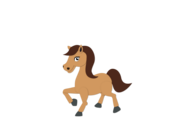
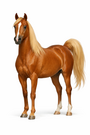
Hu is for Helga Horse.
Prompt snippets
Helga Horse is a graceful light brown (chestnut) female horse, specifically a refined Arabian mare, with a smooth, shimmering coat the color of burnished copper. Her mane and tail are a few shades lighter, a lovely flaxen-gold, long, flowing, and finely textured. She has a delicate, dished face with large, expressive, dark doe-eyes, and alert, pricked ears. A narrow, asymmetrical white stripe, or blaze, runs down the center of her face. Her confirmation is athletic yet elegant, with long, slender legs and a naturally high-set tail carriage.
Characters with hu