乼
乼 character breakdown
Chinese characters are built out of smaller characters. Each component carries a mnemonic symbol - one concrete object that stands in for it - and a mnemonic story hands those objects to the person and the place that stand for the pronunciation. Learn a component once and every character that reuses it gets easier.
Component Translations
to inject / to pour into / to concentrate / to pay attention / stake (gambling) / classifier for sums of money / variant of 註|注[zhu4]
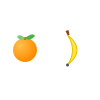
second of the ten Heavenly Stems 十天干[shi2 tian1 gan1] / second in order / letter "B" or Roman "II" in list "A, B, C", or "I, II, III" etc / second party (in legal contract, usually 乙方[yi3 fang1], as opposed to 甲方[jia3 fang1]) / ethyl / bent / winding / radical in Chinese characters (Kangxi radical 5) / ancient Chinese compass point: 105°
Characters with 乼 as component
乼
is not used as a component in another character.
Words with 乼
乼
is not used as a component in another word.
Sentences with 乼
乼 currently does not appear in any sentence.
Want to remember 乼 for good?
Make it your learning target and MandarinBanana works out the shortest route to it: the two sounds its syllable is built from, then the components of the character itself, one short step at a time. No account needed to start.
乼
xx
rope (Korean gugja)
Comments
There aren't any comments yet.
Prompt snippets
No snippets yet.