乥
乥 character breakdown
Chinese characters are built out of smaller characters. Each component carries a mnemonic symbol - one concrete object that stands in for it - and a mnemonic story hands those objects to the person and the place that stand for the pronunciation. Learn a component once and every character that reuses it gets easier.
Component Translations
one of the characters used in kwukyel (phonetic "ho"), an ancient Korean writing system
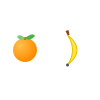
second of the ten Heavenly Stems 十天干[shi2 tian1 gan1] / second in order / letter "B" or Roman "II" in list "A, B, C", or "I, II, III" etc / second party (in legal contract, usually 乙方[yi3 fang1], as opposed to 甲方[jia3 fang1]) / ethyl / bent / winding / radical in Chinese characters (Kangxi radical 5) / ancient Chinese compass point: 105°
Characters with 乥 as component
乥
is not used as a component in another character.
Words with 乥
乥
is not used as a component in another word.
Sentences with 乥
乥 currently does not appear in any sentence.
Want to remember 乥 for good?
Make it your learning target and MandarinBanana works out the shortest route to it: the two sounds its syllable is built from, then the components of the character itself, one short step at a time. No account needed to start.
乥
xx
one of the characters used in kwukyel (phonetic "hol"), an ancient Korean writing system
Comments
There aren't any comments yet.
Prompt snippets
No snippets yet.