Skip to content

A person key: this person stands for the start of a syllable, shu-. Every character whose sound starts this way has this person in its scene. What are sound keys?

shu · animal

/ʂu/

Pronunciation tips

The “Cheat Code”

Think of “sh” in shoe, but make it darker and farther back in the mouth, with the tongue curled slightly up—then go straight into the “u/oo” vowel.

Read full instructions

Mouth Mechanics (step-by-step)

  1. Start relaxed: Jaw slightly open, face relaxed.
  2. Tongue position (the key):
    • Pull the tongue slightly back.
    • Curl the tip of the tongue gently upward (not touching the teeth).
    • Aim the airflow toward the roof of the mouth just behind the ridge you feel behind your top front teeth (but the tongue is farther back than English “sh”).
  3. Teeth: Keep the teeth close but not clenched. There should be a narrow passage for the air.
  4. Lips: Round the lips a little (as if preparing to say “oo”). This rounding helps the “shu-” quality.
  5. Make the sound: Let air hiss steadily to produce the sh-like friction, then immediately glide into the final:
    • shu- goes into an “oo”-type sound.
    • In many “shu-” syllables (like shua, shuo, shuai, shui, shuan, shun, shuang), you’ll feel a quick “w”-like glide as you move from the initial into the vowel.

Goal feel: a retro-style “sh” (tongue slightly curled back) + quick glide into the vowel, with no extra stop or “t” sound.


English Approximation (what to copy and how to modify)

Because the exact “shu-” initial is not a perfect match to any single English sound, use English “sh” as your base and modify it:

  1. “shoe” — use the “sh-” part
    • Copy the “sh” sound, but pull it farther back and curl the tongue tip slightly up.
  2. “shook” — use the “sh-” part
    • This can help you keep the sound darker (less “bright” and forward).
  3. “rush you” (said quickly) — use the “sh y-” blend
    • If you say “rush you” fast, you may briefly create a more retracted, heavier “sh”. Then adjust by curling the tongue tip slightly upward and rounding the lips into “oo.”

How to modify English “sh” to get close: - English “sh” is usually too front-of-mouth. To fix it, pull the tongue back and let the air hit a point farther back on the roof of the mouth.
- Add light lip rounding early, as if “oo” is coming next.


Common Mistakes (English-speaker traps)

  • Too English “sh” (too forward): If it sounds like ordinary “sh” with the tongue pushing toward the front teeth, it will not sound like Mandarin sh-.
  • Accidentally saying “s” or “sw”: “shu-” is not “soo” and not “swoo.” Keep it clearly sh-like, not “s.”
  • Adding a “t” or “ch” bite: Don’t let it turn into “choo.” It should be a smooth hiss, not a stop + hiss.
  • Forgetting lip rounding: Especially in syllables like shu, shuo, shun, lack of rounding can make the sound drift toward something like “she-” instead of “shu-.”

Practice Pairs (visualize the target sound)

These English words are approximations to help you “aim” your mouth. The left side is the Mandarin target; the right side is only a guide for the starting feel.

Pinyin syllable (target) English approximation (guide) What to copy shu shoe Start with “sh,” then go into “oo”; make the “sh” farther back and darker shua shwa- (as in “schwa,” but with sh) A quick “sh” + “w” glide into “ah” shuo shwo- “sh” then a clear w-glide into an “oh”-like sound shuai shwye (like “sh” + “why”) “sh” + w glide + “ai/eye” shui shway “sh” + w glide + “ay” shuan shwan “sh” + w glide + “an,” ending with n shun shwun “sh” + w glide + relaxed “uh,” ending with n shuang shwang “sh” + w glide + “ang,” ending with the back nasal sound

Tip for tones: Keep the initial “sh-” exactly the same across tones; only your pitch contour changes.


Comparisons and caveats (similar Pinyin sounds to watch)

A) sh- vs x-

  • sh- (as in shu-) is darker, heavier, farther back, with the tongue tip slightly curled up/back.
  • x- is lighter and more “hissy,” made farther forward with the tongue more flat and close to the roof of the mouth.
  • If your “shu” starts sounding like “syu/xyu”, you are likely drifting toward x-.

B) sh- vs s-

  • s- is a straight “s” (front-of-mouth), with a sharper, thinner hiss.
  • sh- should sound rounded and deeper, not like “see/soo.”

C) sh- vs zh- / ch-

  • zh- and ch- begin with a brief “stop” feeling (like a tiny “d/t” before the hiss), while sh- is continuous airflow from the start.
  • If you hear yourself making something like “j/zh + oo” or “ch + oo,” you’re likely adding that stop. For sh-, don’t “tap” into it—just start hissing smoothly.

D) “shu-” syllables often include a “w” glide

In shua, shuo, shuai, shui, shuan, shun, shuang, there is typically a quick rounded glide after the initial—your mouth moves toward w/oo-shape immediately. If you pronounce them without that glide, they may sound unnatural or like a different syllable.

E) Keep the initial steady across the set

Whether you say shu, shua, shuo, shuai, shui, shuan, shun, shuang, the initial is the same “sh-” mouth position—only the vowel movement changes right after it.
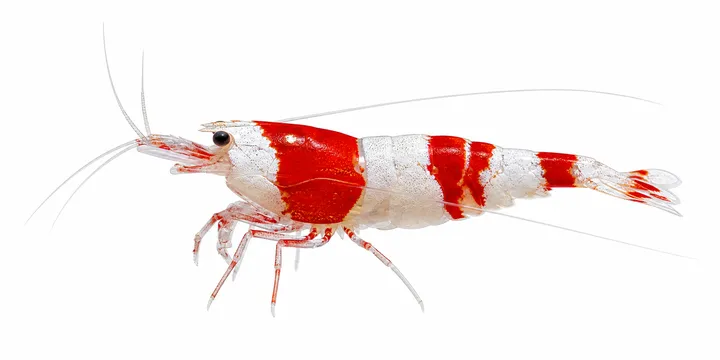
The person

Shu is for Sheldon Shrimp.

Comic of the mnemonic for shu

Where this person goes

144 characters, by room.

In Ø1 · no ending, in front

shū (all 34)

In Ø2 · no ending, kitchen

shú (all 7)

In Ø3 · no ending, living room

shǔ (all 16)
  • 数 shǔ to count

    数 shǔ

    shǔ
    1. to count
    2. to count as
    3. to regard as
    4. to enumerate (sb's shortcomings)
    shù
    1. number
    2. figure
    3. several
    4. CL:个 gè
    shuò
    1. frequently
    2. repeatedly

    From the CC-CEDICT dictionary.

  • 属 shǔ category

    属 shǔ

    shǔ
    1. category
    2. genus (taxonomy)
    3. family members
    4. dependents
    5. to belong to
    6. subordinate to
    7. affiliated with
    8. be born in the year of (one of the 12 animals)
    9. to be
    10. to prove to be
    11. to constitute
    zhǔ
    1. to join together
    2. to fix one's attention on
    3. to concentrate on

    From the CC-CEDICT dictionary.

  • 暑 shǔ heat

    暑 shǔ

    shǔ
    1. heat
    2. hot weather
    3. summer heat

    From the CC-CEDICT dictionary.

  • 鼠 shǔ rat

    鼠 shǔ

    shǔ
    1. rat
    2. mouse
    3. CL:只 zhī
    4. (bound form) rat; mouse

    From the CC-CEDICT dictionary.

  • 署 shǔ office

    署 shǔ

    shǔ
    1. office
    2. bureau
    3. (Taiwan pr. [shu4]) to sign
    4. to arrange

    From the CC-CEDICT dictionary.

  • 薯 shǔ potato

    薯 shǔ

    shǔ
    1. potato
    2. yam
    3. variant of 薯 shǔ

    From the CC-CEDICT dictionary.

In Ø4 · no ending, bathroom

shù (all 25)
  • 树 shù tree

    树 shù

    shù
    1. tree
    2. CL:棵 kē
    3. to cultivate
    4. to set up

    From the CC-CEDICT dictionary.

  • 束 shù to bind

    束 shù

    shù
    1. to bind
    2. bunch
    3. bundle
    4. classifier for bunches, bundles, beams of light etc
    5. to control

    From the CC-CEDICT dictionary.

  • 术 shù method

    术 shù

    shù
    1. method
    2. technique
    zhú
    1. various genera of flowers of Asteracea family (daisies and chrysanthemums), including Atractylis lancea

    From the CC-CEDICT dictionary.

  • 述 shù to state

    述 shù

    shù
    1. to state
    2. to tell
    3. to narrate
    4. to relate

    From the CC-CEDICT dictionary.

  • 庶 shù numerous

    庶 shù

    shù
    1. numerous
    2. common people (or populace)
    3. born of a concubine
    4. old variant of 庶 shù

    From the CC-CEDICT dictionary.

In a1 · in front

shuā syllable page
  • 刷 shuā to brush

    刷 shuā

    shuā
    1. to brush
    2. to paint
    3. to daub
    4. to paste up
    5. to skip class (of students)
    6. to fire from a job
    shuà
    1. to select

    From the CC-CEDICT dictionary.

  • 唰 shuā (onom.) swishing

    唰 shuā

    shuā
    1. (onom.) swishing
    2. rustling

    From the CC-CEDICT dictionary.

In a3 · living room

shuǎ syllable page
  • 耍 shuǎ to play with

    耍 shuǎ

    shuǎ
    1. surname Shua
    2. to play with
    3. to wield
    4. to act (cool etc)
    5. to display (a skill, one's temper etc)

    From the CC-CEDICT dictionary.

In ai1 · in front

shuāi syllable page
  • 摔 shuāi to throw down

    摔 shuāi

    shuāi
    1. to throw down
    2. to fall
    3. to drop and break

    From the CC-CEDICT dictionary.

  • 衰 shuāi to decline

    衰 shuāi

    cuī
    1. mourning garments
    shuāi
    1. to decline
    2. to wane
    3. to become weak or feeble

    From the CC-CEDICT dictionary.

In ai3 · living room

shuǎi syllable page
  • 甩 shuǎi to throw

    甩 shuǎi

    shuǎi
    1. to throw
    2. to fling
    3. to swing
    4. to leave behind
    5. to throw off
    6. to dump (sb)

    From the CC-CEDICT dictionary.

In ai4 · bathroom

shuài syllable page
  • 帅 shuài handsome

    帅 shuài

    shuài
    1. surname Shuai
    2. handsome
    3. graceful
    4. smart
    5. commander in chief
    6. (coll.) cool!
    7. sweet!
    8. (bound form) commander-in-chief
    9. (bound form) to lead; to command
    10. handsome; graceful; dashing; elegant
    11. (coll.) cool!; sweet!
    12. (Chinese chess) general (on the red side, equivalent to a king in Western chess)

    From the CC-CEDICT dictionary.

  • 率 shuài to lead

    率 shuài

    lǜ
    1. rate
    2. frequency
    shuài
    1. to lead
    2. to command
    3. rash
    4. hasty
    5. frank
    6. straightforward
    7. generally
    8. usually

    From the CC-CEDICT dictionary.

  • 帥 shuài handsome

    帥 shuài

    shuài
    1. surname Shuai
    2. handsome
    3. graceful
    4. smart
    5. commander in chief
    6. (coll.) cool!
    7. sweet!
    8. (bound form) commander-in-chief
    9. (bound form) to lead; to command
    10. handsome; graceful; dashing; elegant
    11. (coll.) cool!; sweet!
    12. (Chinese chess) general (on the red side, equivalent to a king in Western chess)

    From the CC-CEDICT dictionary.

In an1 · in front

shuān syllable page

In an4 · bathroom

shuàn syllable page
  • 涮 shuàn to rinse

    涮 shuàn

    shuàn
    1. to rinse
    2. to trick
    3. to fool sb
    4. to cook by dipping finely sliced ingredients briefly in boiling water or soup (generally done at the dining table)

    From the CC-CEDICT dictionary.

In ang1 · in front

shuāng (all 11)

In ang3 · living room

shuǎng syllable page

In ei3 · living room

shuǐ syllable page

In ei4 · bathroom

shuì syllable page

In (e)n3 · living room

shǔn syllable page

In (e)n4 · bathroom

shùn (all 7)

In o1 · in front

shuō syllable page
  • 说 shuō to speak

    说 shuō

    shuì
    1. to persuade
    shuō
    1. to speak
    2. to say
    3. to explain
    4. to scold
    5. to tell off
    6. a theory (typically the last character in a compound, as in 日心說|日心说 heliocentric theory)
    7. variant of 说 shuō
    8. to speak; to talk; to say
    9. to explain; to comment
    10. to scold; to tell off
    11. (bound form) theory; doctrine

    From the CC-CEDICT dictionary.

  • 說 shuō to speak

    說 shuō

    shuì
    1. to persuade
    shuō
    1. to speak
    2. to say
    3. to explain
    4. to scold
    5. to tell off
    6. a theory (typically the last character in a compound, as in 日心說|日心说 heliocentric theory)
    7. to speak; to talk; to say
    8. to explain; to comment
    9. to scold; to tell off
    10. (bound form) theory; doctrine

    From the CC-CEDICT dictionary.

In o4 · bathroom

shuò (all 14)
  • 朔 shuò beginning

    朔 shuò

    shuò
    1. beginning
    2. first day of lunar month
    3. north

    From the CC-CEDICT dictionary.

  • 硕 shuò large

    硕 shuò

    shuò
    1. large
    2. big

    From the CC-CEDICT dictionary.

  • 欶 shuò to suck

    欶 shuò

    shuò
    1. to suck
    2. to drink

    From the CC-CEDICT dictionary.

  • 烁 shuò bright

    烁 shuò

    shuò
    1. bright
    2. luminous

    From the CC-CEDICT dictionary.

  • 碩 shuò large

    碩 shuò

    shuò
    1. large
    2. big

    From the CC-CEDICT dictionary.

  • 蒴 shuò pod

    蒴 shuò

    shuò
    1. pod
    2. capsule

    From the CC-CEDICT dictionary.

Recordings

Loading recordings