Mnemonic comic for 的
Translation
Mnemonic
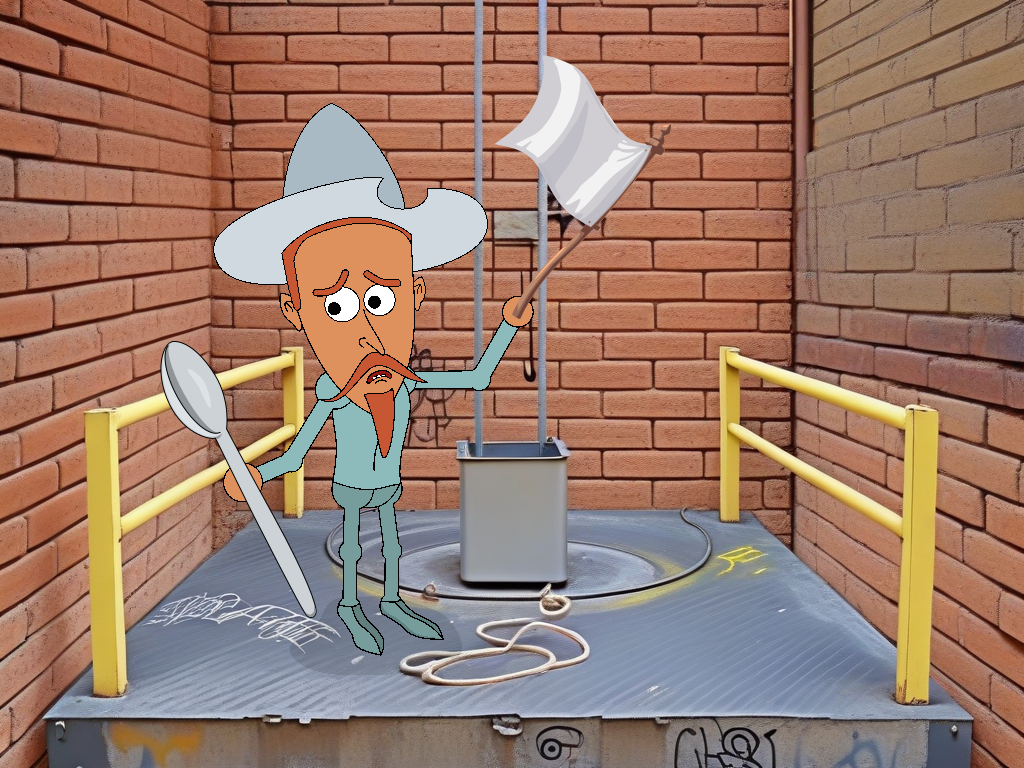
A mnemonic is a short, deliberately ridiculous scene, built to be hard to forget. Who appears in it and where it takes place are how the pronunciation is stored; the objects in it stand for the parts the character is written with. That is the Marilyn Method, and the comic below is the same scene, drawn.
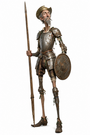
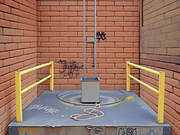
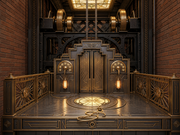
Don Quixote (d) ends up on the elevator’s roof (e5) after a standoff. His only weapon left is a silver spoon (勺), so he can only wave with a white flag (白).
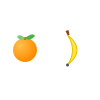
All translations for 的
Comments
There you go, now you can read approximately 3% of all Chinese text (if I remember correctly). Congratulations!
But what is more important: if you've stuck around so long to arrive here, you've already completed the most difficult part of learning Chinese characters! I've introduced a lot of different concepts along the way: Pinyin initials and finals, mnemonic symbols, tone to location mapping, and so on. From here it is only getting easier! Don't worry if you don't feel like you've fully understand everything already. Just continue reading comics, and the picture will get clearer with each character you see. You've already seen all aspects of the system, from now on no new concepts will be introduced. And with every new character you learn, you deepen your memory of the components used in that character.
Matthias, almost 3 years ago
How to pronounce 的
MandarinBanana teaches pronunciation with the Marilyn Method: every Pinyin syllable is one initial plus one final, the initial becomes a person, an animal or a deity, and the final becomes a place in your memory palace — with the tone deciding which part of that place the scene happens in. Remember the little story below for each half and the whole syllable comes back with them.







的 character breakdown
Chinese characters are built out of smaller characters. Each component carries a mnemonic symbol - one concrete object that stands in for it - and a mnemonic story hands those objects to the person and the place that stand for the pronunciation. Learn a component once and every character that reuses it gets easier.
Component Translations
Characters with 的 as component
Words with 的
Want to remember 的 for good?
Make it your learning target and MandarinBanana works out the shortest route to it: the two sounds its syllable is built from, then the components of the character itself, one short step at a time. No account needed to start.
4 translations
Prompt snippets
AI Images
No AI images generated yet.